
You turn over in bed and feel a sharp catch near your pubic bone. Getting dressed now means sitting down, and the stairs you used to climb without thinking have become something you plan around. Pelvic girdle pain during pregnancy can make ordinary movements unexpectedly difficult, but you don't have to dismiss it as something every pregnant person must endure.
The useful questions are where it hurts, which movements trigger it, and whether your ability to manage daily life is changing. Those details help a clinician distinguish a pelvic joint problem from back pain or a condition that needs urgent maternity care.
Table of Contents
- What Pelvic Girdle Pain Feels Like in Pregnancy
- Which Movements Reveal Pelvic Girdle Pain
- Warning Signs That Need Urgent Care
- Why the Pelvis Hurts and Who Is at Risk
- Daily Adjustments That Ease Pelvic Strain
- Treatment Options Safe During Pregnancy
- Recovery After Birth and the Next Pregnancy
- Book a Pelvic Assessment Before Pain Limits Daily Life
What Pelvic Girdle Pain Feels Like in Pregnancy
Pelvic girdle pain, often shortened to PGP, describes pain around the pelvic joints. These include the pubic symphysis at the front and the sacroiliac joints at the back, where the pelvis meets the spine. You might feel pain in the groin, inner thigh, buttock or lower back, sometimes mainly on one side.
Think of the pelvis as a load-sharing ring. Like a bridge, it relies on connected joints, ligaments and muscles to transfer weight as you move. Pregnancy changes the demands on that system, and some movements can become painful even though the pelvis isn't damaged or coming apart.
The sensation may be a dull ache, a sharp catch, or discomfort accompanied by clicking. Tasks that put your weight through one leg often make it more noticeable.
Older descriptions used symphysis pubis dysfunction, but PGP is broader because the front joint isn't always the only area involved. Symptoms can begin early in pregnancy, during labour or after delivery, as described in the exercise systematic review in the British Journal of Sports Medicine.
A PLOS ONE study reported that 22.5% of pregnant women experience pregnancy-related PGP. Higher estimates for combined low-back and pelvic pain describe a broader category, not precisely the same condition.
Pelvic pain in pregnancy is common, but it isn't something you simply have to endure. Its movement pattern can be more informative than its location alone.
Which Movements Reveal Pelvic Girdle Pain
Use everyday activities to describe your symptoms, not to push through pain or diagnose yourself. You don't need to deliberately stand on a painful leg or repeatedly press a tender area.
Movement patterns that point to pelvic girdle pain
| Movement | Typical pelvic girdle pattern | Ask a clinician if |
|---|---|---|
| Standing on one leg, such as dressing or stepping into a car | Sharp pain at one joint, worse with weight through one leg | Pain stops you bearing weight |
| Rolling in bed or getting up | Catching or stabbing pain at the front or back of the pelvis | Pain is constant at rest or wakes you at night |
| Walking or climbing stairs | Pain builds with distance and eases with rest | Walking tolerance drops from week to week |
| Pressing over the pubic bone | Tenderness over the pubic symphysis | Swelling, heat or redness develops over the area |
| Sitting for long periods | Comfortable at first, then uncomfortable | Numbness, tingling or leg weakness occurs |
Pattern matters more than a pain score alone. A modest pain that reliably appears whenever you lift a leg can tell a clinician something different from an intense, unchanging ache at rest. Neither pattern should be dismissed, but they call for different questions.
Keep a short movement log
Over the next few days, record the movement that brought symptoms on, the pain location, how far you could comfortably walk, and whether pain interrupted sleep. Note whether nighttime pain occurs specifically when turning or continues while you're still.
Matching several rows makes a musculoskeletal assessment worthwhile, but it doesn't confirm PGP. If you recognise a warning sign, contact your maternity team rather than waiting to finish the log or attend a routine appointment.
Warning Signs That Need Urgent Care
Typical PGP is usually mechanical, meaning that movement and loading influence the symptoms. Fever, bleeding, fluid loss or new neurological symptoms aren't features to manage with a support belt or home exercises.
Red flags and the action to take
| Symptom | Why it matters | What to do |
|---|---|---|
| Fever or chills | Possible infection | Seek same-day medical review |
| Regular contractions or leaking fluid | Possible preterm labour | Contact maternity triage now |
| Vaginal bleeding | Possible obstetric cause | Seek emergency assessment |
| Numbness, tingling or leg weakness | Possible nerve involvement | Seek urgent medical assessment |
| Pain after a fall or trauma | Possible fracture or injury | Seek urgent medical review |
| Calf pain, swelling or redness in one leg | Possible deep vein thrombosis | Seek urgent medical review |
Tell the maternity team how far along you are, when the symptoms began, and whether you can walk safely. Persistent or escalating pain and inability to bear weight also require prompt medical assessment, even without another symptom in the table.
Pain that wakes you only when rolling can occur with a mechanical condition. Pain that becomes constant, feels different from your usual pattern, or comes with illness deserves a fresh assessment rather than an assumption that it's the same problem.
Information about hip pain and numbness in the leg may help you describe the symptoms, but it can't rule out urgent nerve involvement. New bladder or bowel dysfunction, numbness around the genitals or buttocks, or rapidly worsening weakness requires emergency care.
A symptom that changes character or comes with any of these warning signs is a reason to be assessed, not a reason to wait for your next routine appointment.
If you're uncertain which service to use, call your obstetric team or maternity triage. They can direct you to the appropriate setting; a musculoskeletal appointment shouldn't delay that contact.
Why the Pelvis Hurts and Who Is at Risk
PGP is a load-sharing problem: as pregnancy progresses, the pelvis and its surrounding muscles manage changing forces. The pelvis works like a ring, with the joints, abdominal and hip muscles, pelvic floor, and pelvic girdle sharing the work of supporting movement. Changes in posture and load can affect how these parts coordinate.
The clinical guideline on pelvic girdle pain in pregnancy and postpartum estimates point prevalence at approximately 20%, while noting that studies define the condition differently. This helps explain why a symptom pattern and clinical assessment matter more than assuming one joint is the source.
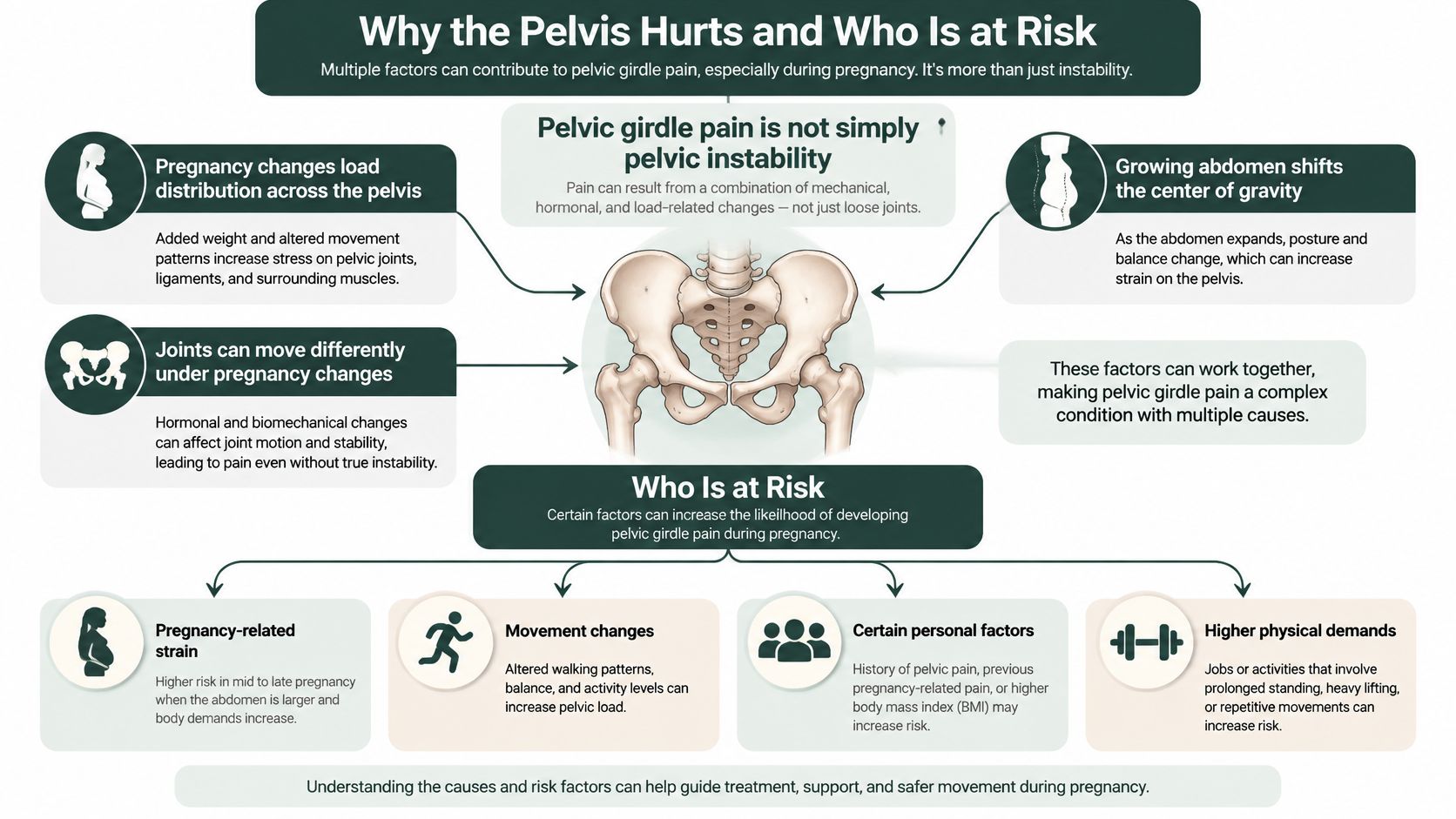
Factors that may raise clinical suspicion include:
- Previous symptoms: Low-back pain, pelvic pain, or PGP in an earlier pregnancy.
- Pelvic trauma: A previous injury may affect movement and tolerance for load.
- Physical demands: Repeated lifting, prolonged standing, or awkward work positions.
- Individual factors: Higher body mass index or generalised joint hypermobility.
These factors guide assessment, but do not confirm a diagnosis. Their absence does not rule out PGP. A clinician considers which movements bring on pain, how symptoms change over time, and whether another cause needs attention.
For wider context, your changing body while pregnant covers physical changes beyond the pelvis. Pain extending down the leg may follow a different pattern, so osteopathic assessment for sciatica can help distinguish that possibility from PGP.
Practical principle: Several contributors can make the same movement painful. Care can combine load management, movement strategies, and exercise to address how the pelvis and surrounding muscles share work.
Daily Adjustments That Ease Pelvic Strain
Start with the task that causes the most trouble. A useful adjustment should make that task easier without creating discomfort elsewhere.
Daily adjustments that reduce pelvic joint strain
| Situation | Adjustment | Why it helps |
|---|---|---|
| Getting out of bed | Roll onto your side, bend the knees and push up with your arms | Limits twisting and shearing across the pelvis |
| Climbing stairs | Lead with the more comfortable leg and hold the rail | Makes the task less demanding on the painful side |
| Getting into a car | Sit first, then swing both legs in together within a comfortable range | Limits asymmetric hip and pelvic movement |
| Sleeping on your side | Place a pillow between the knees and another under the bump if comfortable | Supports the legs and abdomen |
| Carrying items or children | Balance manageable loads or use a trolley | Avoids prolonged one-sided loading |
| Standing for long periods | Begin with weight evenly distributed; trial a low footrest only if comfortable | Offers a change of position without forcing an aggravating stance |
Don't interpret symmetry as a requirement to hold yourself rigidly. The aim is to reduce movements that repeatedly provoke symptoms while keeping comfortable movement available.
For example, sit to put on trousers instead of balancing on one leg. Split grocery bags into manageable loads, and avoid carrying a toddler on one hip for prolonged periods. Shorter walks with planned pauses may be easier to tolerate than continuing until you limp.
Using a pelvic support belt
A support belt generally sits low around the hips, below the bump, rather than tightly around the abdomen. It should feel supportive, not restrictive, and it shouldn't cause numbness, pressure or increased pain.
A pregnancy-experienced clinician can help you trial its position during a meaningful task, such as walking across the room. If the task isn't easier, tighter isn't necessarily better.
Stop any adjustment that increases symptoms. A pillow, belt or new movement strategy is an option, not a test you need to pass. Report a worsening pattern instead of repeatedly trying to make an uncomfortable technique work.
Treatment Options Safe During Pregnancy
If turning in bed, climbing stairs or getting dressed still hurts, treatment can focus on making those tasks easier while preserving comfortable movement. The pelvis works as a load-sharing ring, so care often combines movement practice, graded strengthening and symptom management rather than relying on one technique.
- Pregnancy-experienced physiotherapy can assess movement and build motor control and strength gradually. A clinician might begin with a small-range pelvic tilt or supported bridge, then adjust the movement according to your symptoms. Hip, abdominal and pelvic-floor exercises should match your assessment and response.
- Osteopathic musculoskeletal care can address muscular tension, discomfort and mobility limits. Restore provides osteopathic care for mothers throughout pregnancy and postpartum, with treatment adapted to the person's needs and comfort.
- A pelvic support belt may help with selected activities. Judge it by whether a task becomes easier, rather than by how tightly it fits.
- Sleep and emotional support can address barriers such as disrupted rest, fear of movement or distress. These concerns deserve attention alongside physical symptoms.
At the first visit, expect questions about when symptoms began, which movements aggravate them, your pregnancy history and which daily tasks have become difficult. An examination may include observing your walking and transfers, with carefully chosen pain-provocation tests. A severely painful movement should not need repeated demonstration.
Set a practical progress measure
Ask at the first appointment: “Which movement will we practise, how will you progress it, and what change should prompt a review?” For example, a lifting progression might start with a light object close to your body, then increase the task only if symptoms remain manageable. The clinician can also specify when to stop an exercise or contact them sooner.
Tie the plan to a meaningful activity, such as dressing or completing a necessary walk. Easier transfers or better sleep can be useful early signs of progress; pain does not have to disappear immediately for a treatment plan to be helping. If an exercise repeatedly worsens symptoms, report that response so the plan can be adjusted.
Recovery After Birth and the Next Pregnancy
A clinical review in the Australian Journal of General Practice reports that about 93% improve within three months, while approximately 1–2% still report pain at one year. These figures describe different points along recovery: improvement is common, and some people continue to have pain.
A systematic review and meta-analysis in the International Urogynecology Journal reported pooled prevalence of approximately 59% during pregnancy and 32% during the first postpartum year. Prevalence describes how common pelvic girdle pain is at a given time; it does not show how much an individual's symptoms have changed.
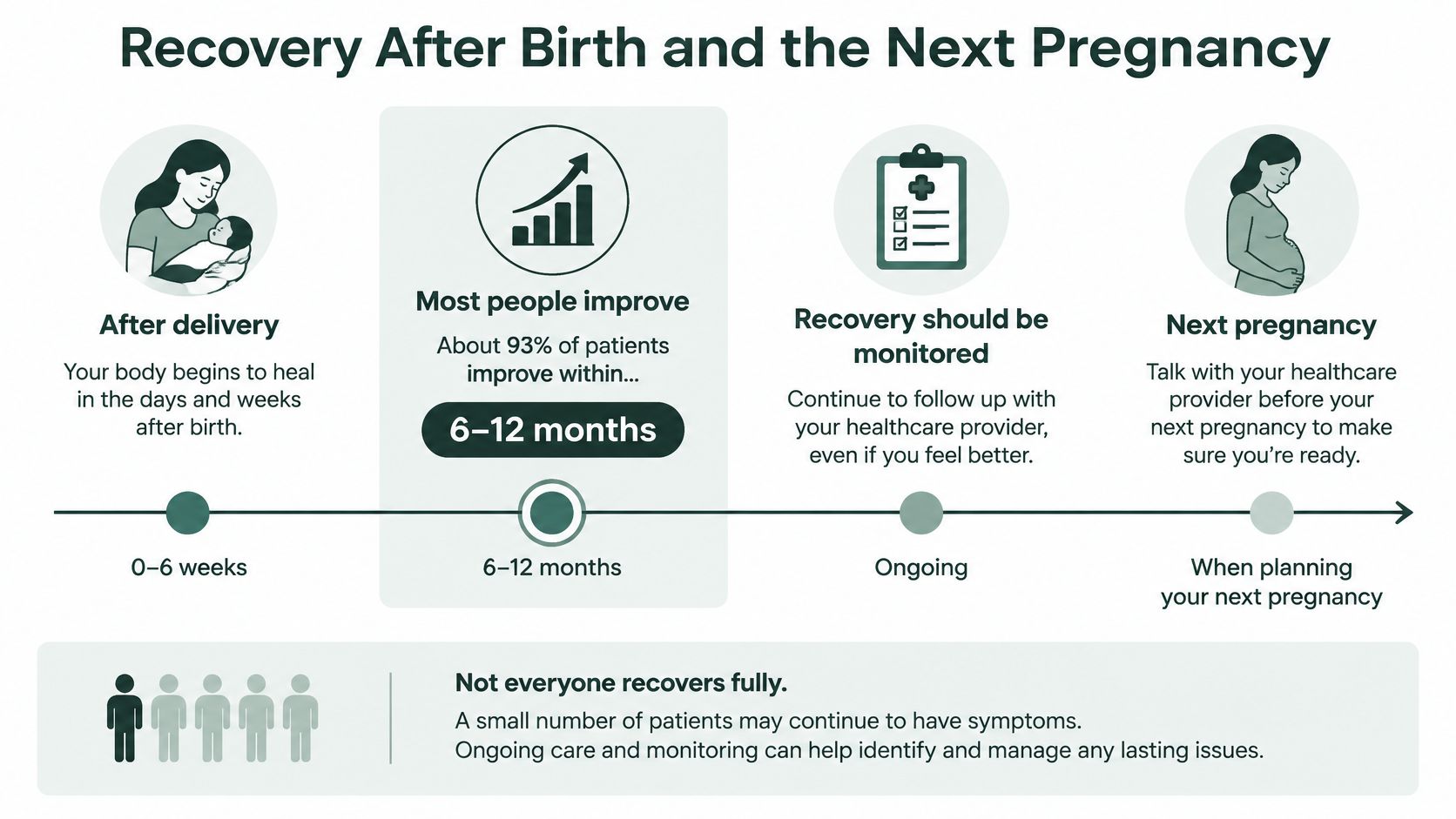
Use function as your recovery checkpoint
Track what your body can do as recovery unfolds:
- Early after birth: Notice whether getting out of bed, walking to the bathroom and caring for your baby are becoming easier.
- During postpartum follow-up: If pain still limits daily tasks, ask for reassessment and a plan for the next stage of recovery.
- When increasing activity: Build lifting, walking and exercise progressively, at a pace suited to your current capacity.
- Before another pregnancy: Share your previous symptom pattern and discuss early support, so care can be planned around your needs.
Back pain before pregnancy, emotional distress during pregnancy and certain positive clinical tests are associated with persistent symptoms. These factors can guide follow-up, while recovery remains individual. Emotional distress can be addressed alongside physical care.
Persistent postpartum lower-back pain deserves assessment because it may reflect a different or additional problem, rather than continuing pelvic girdle pain. Feeding, lifting and carrying can make back discomfort more noticeable.
A previous episode can inform planning for a later pregnancy, when symptoms may recur. It does not determine the outcome. Osteopathic care can support women through postpartum recovery and the physical demands of motherhood.
Book a Pelvic Assessment Before Pain Limits Daily Life
Pelvic girdle pain can change as pregnancy progresses and may continue after birth, so an assessment can help clarify what is limiting movement now and what to monitor next. A simple record can make that first conversation more useful.
Note your symptom pattern. Write down where pain occurs, which movements trigger it, how far you can walk, and whether it wakes you at night. Bring the notes even if they are brief.
Arrange an assessment. If symptoms are worsening, book care rather than waiting for your log to feel complete. Follow the urgent-care guidance in the warning-signs section if those symptoms occur.
Choose pregnancy-informed care. Look for a clinician who can coordinate with your maternity team. For families in Aurora, Colorado, Restore Osteopathic Medicine provides osteopathic care for mothers during pregnancy and postpartum.
Describe what daily life requires. Share the work, lifting, childcare and other activities you need to manage, and identify which one matters most to you. This helps connect the pain pattern with practical limits.
Bring relevant context. Your obstetric history and notes on symptom triggers can help the clinician understand how the problem has changed over time. At the visit, ask what changes to monitor and when to seek reassessment.
Restore's osteopathic care can help address pregnancy-related tension, discomfort, mobility issues and postpartum strain. Visit Restore Osteopathic Medicine to arrange an assessment.