
A knee that suddenly looks puffy can make every step feel uncertain. Maybe it started after a run, or you woke up with stiffness and noticed your knee feels warmer than usual. Swelling is a signal, not a diagnosis: different problems can set it off, and the right next step depends on how it began and what else is happening.
Table of Contents
- Common Causes of Knee Inflammation at a Glance
- Injury and Overuse Causes That Start Mechanically
- Age, Body Weight and Osteoarthritis Risk
- How Inflammation Starts and Spreads Inside the Knee
- When Knee Swelling Signals Infection or Crystals
- Diagnostic Clues and Basic Workup Your Doctor Uses
- Your Next Step for Knee Swelling That Will Not Settle
Common Causes of Knee Inflammation at a Glance
Think of swelling as a smoke alarm. It tells you something needs attention, but it doesn't tell you which “fire” started it. A twist, gradual joint changes, crystals, or infection can all produce a swollen knee, yet they call for different responses.
| Cause | Typical onset | Who it tends to affect | Hallmark feature |
|---|---|---|---|
| Acute injury to a ligament, meniscus, or cartilage | Suddenly, within hours of a twist, fall, or impact | Athletes and active adults of any age | Fast swelling, locking, or a feeling that the knee gives way |
| Overuse or repetitive loading | Gradually, building over days or weeks | Runners, cyclists, gardeners, and people who kneel for work | Pain and swelling that worsen after activity |
| Osteoarthritis | Slowly, over months or years | Adults over 50, women more often after 50, and people with excess weight | Stiffness after rest and pain on stairs |
| Inflammatory arthritis, such as rheumatoid or psoriatic arthritis | Over time, sometimes affecting several joints | People with autoimmune inflammatory conditions; psoriatic arthritis can occur with psoriasis | Persistent morning stiffness and symptoms in more than one joint |
| Crystal arthritis, such as gout or pseudogout | Sudden flare, sometimes overnight | Adults with crystal arthritis; gout is more common in men | A very painful, hot joint that flares quickly |
| Joint infection, or septic arthritis | Rapidly, over hours or days | Anyone, with increased risk after joint surgery or injection | A hot, swollen knee with fever or difficulty bearing weight |
| Bursitis or a tendon disorder | Gradually or after a change in activity | Runners, cyclists, and people who kneel for work | Tenderness around the kneecap or along a tendon |
The timing offers a useful first clue. Swelling soon after a twist can point to a structural injury. A slower build-up, especially with stiffness after rest, can fit osteoarthritis. A rapidly hot, painful knee with fever belongs in the urgent category, not the “wait and see” column.
Osteoarthritis is driven by interacting mechanical, metabolic, and immune processes, rather than one single cause. The World Health Organization's osteoarthritis fact sheet identifies the knee as the most frequently affected osteoarthritic joint, with approximately 365 million people affected globally. Risk can reflect aging, previous joint injury, repeated occupational or athletic stress, genetic susceptibility, diabetes, and excess body weight. Injury or years of kneeling, squatting, bending, and high-impact loading can affect joint tissues long before symptoms become noticeable.
Before choosing what to do, ask yourself: How quickly did the swelling start? What makes it better or worse? Is there fever, or can't you bear weight? Those details help distinguish a problem that may settle with sensible activity changes from one that needs prompt assessment.
Injury and Overuse Causes That Start Mechanically
A recreational runner increases her weekly mileage by a third. After each run, her knee feels warm and looks a little puffy. That pattern could reflect a sudden structural injury, but without a clear twist or impact, it may also mean the tissues aren't keeping up with the new training load.

When damage happens suddenly
A hard landing or a planted foot that twists can injure the meniscus, a ligament such as the anterior cruciate ligament, or the cartilage. The joint may respond within hours with swelling as blood or fluid collects inside it. A pop, locking, or a knee that buckles can add to the concern, particularly if walking becomes difficult.
A runner who didn't have a distinct injury may be dealing with a different mechanical problem. Repeated loading can outpace tissue recovery, irritating structures around the joint. Patellar tendinopathy, iliotibial band irritation, pes anserine bursitis, and patellofemoral pain can all be associated with pain around the knee, though they don't all cause fluid inside the joint.
When repetition adds up
Sudden jumps in training, repeated kneeling by gardeners or tilers, carpet-fitting work, and deep squatting in warehouse jobs all increase demands on the knee. The key is the pattern: overuse symptoms often build over days, worsen during or after activity, and ease when the provoking load is reduced.
Alignment can also affect how force travels through the joint. Knock-knees or flat feet may shift pressure toward one area, making a sensitive structure easier to irritate. If pain continues, a clinician can assess your movement, strength, and alignment instead of assuming the problem is “too much exercise.” For context on recovery questions involving ligament injuries, see this guide to healing ligaments faster.
Ask yourself whether the knee puffed up within hours of an incident or felt worse the next morning. Notice whether it improves after a short period of reduced loading. Pain felt at the knee doesn't always start there, either: a hip or lower-back problem can refer pain into the knee without causing swelling inside it. If moving the hip reproduces the pain and the knee itself isn't warm or puffy, the source may be elsewhere.
Age, Body Weight and Osteoarthritis Risk
In a matched case-control study described in a review indexed by the U.S. National Library of Medicine, people with a body-mass index of 30 kg/m² or more had 6.8 times the risk of knee osteoarthritis compared with normal-weight controls. That finding describes a group-level association, not a diagnosis or a prediction for any one person. The National Institute of Diabetes and Digestive and Kidney Diseases' information on adult overweight and obesity identifies obesity as a leading risk factor for osteoarthritis of the knees, hips, and ankles.
One way to understand the mechanical connection is to imagine carrying a backpack on every step. The review linked each additional pound of body weight with roughly 2–4 pounds of extra pressure across the knee during activity. A small added load repeated through thousands of steps can increase the work the joint does over time.
More than mechanical pressure
Excess body fat can also contribute to inflammation through biological signals, so the connection isn't only about “wear and tear.” This helps explain why body composition and metabolic health can matter even when there hasn't been a new injury. Diabetes, previous surgery, and weakness in the muscles that support the knee can also influence symptoms and function.
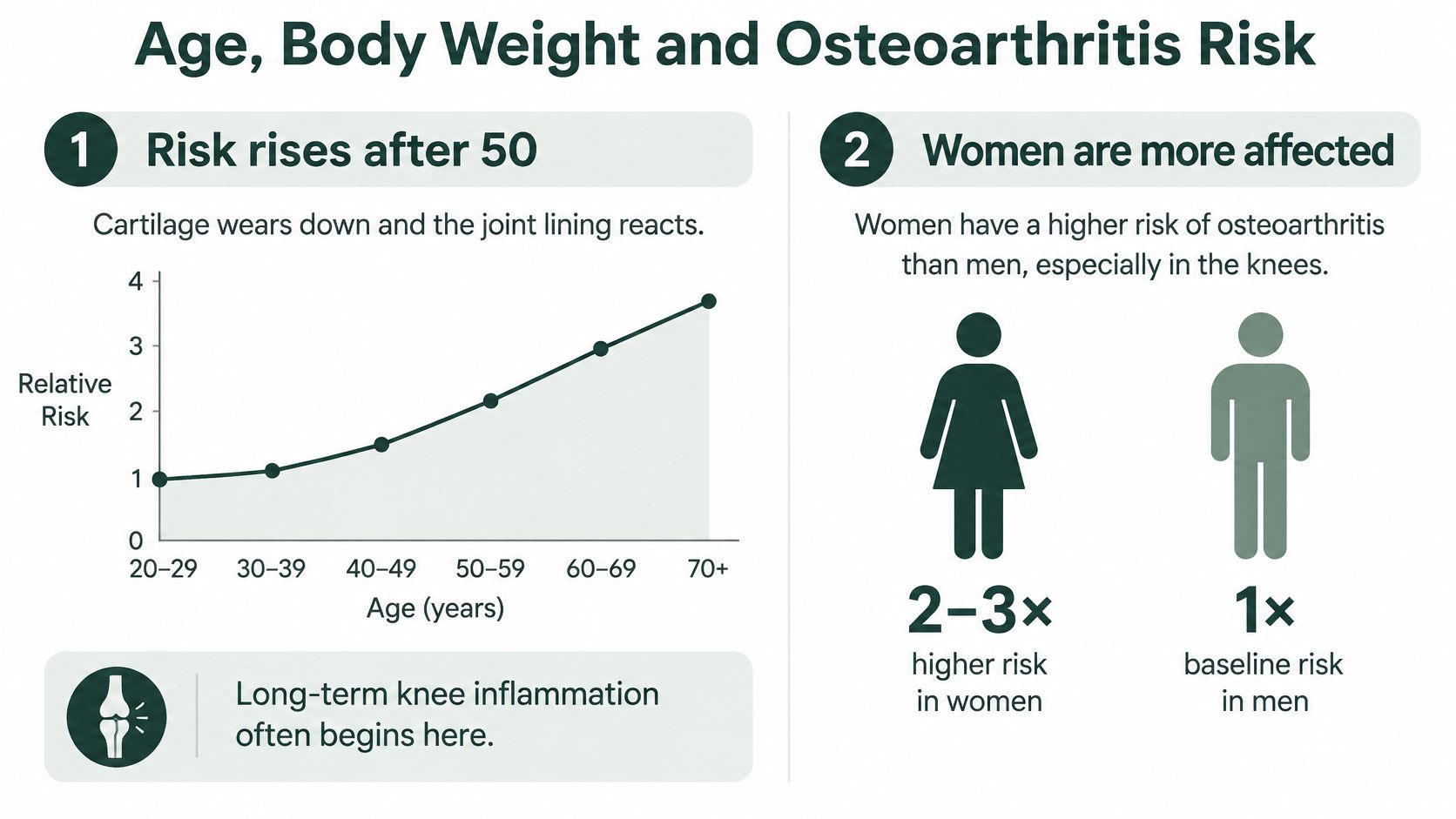
Age matters because cartilage repair capacity declines over time, while the likelihood of accumulated joint stress rises. Osteoarthritis becomes more common with age, and women are affected more often after age 50. In this condition, cartilage changes and the joint lining can react, contributing to stiffness, pain, and swelling.
Weight is a modifiable risk factor, not a measure of effort or a complete explanation. People at a lower body weight can develop knee inflammation after injury, repetitive loading, autoimmune disease, crystal deposition, or infection. And even when weight reduction is appropriate, it can't promise to remove every source of inflammation. For readers looking for a practical overview of weight-related joint concerns, Weight Method's joint pain guide offers additional context. Questions about injection-based treatments for joint symptoms are also discussed in this overview of whether PRP injections may be worth considering.
Symptoms can flare without a fresh injury because a knee may have accumulated years of loading and tissue changes. A familiar activity can become harder when the joint is already irritated, even if nothing dramatic happened that day.
How Inflammation Starts and Spreads Inside the Knee
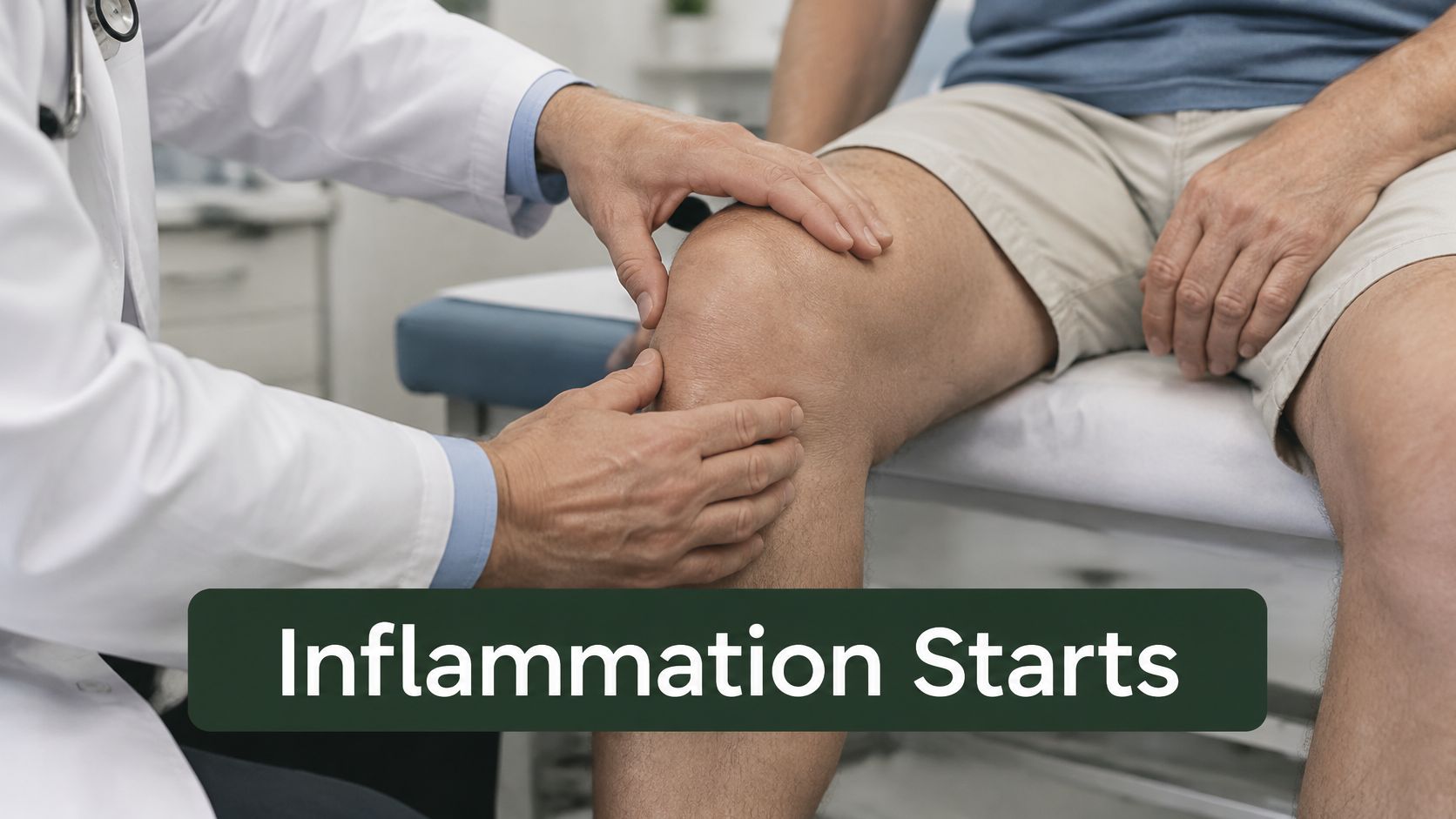
A person notices that their knee feels warm and puffy after an ordinary day. The warmth and swelling are signs of the body responding, but they don't reveal exactly what started that response. In osteoarthritis, inflammation can involve the synovium, the thin membrane lining the joint that produces and regulates joint fluid.
Think of the synovium as the stage where several signals meet. Mechanical stress, fragments from cartilage or meniscus breakdown, and metabolic inflammatory signals can activate cells in the lining. Those cells release chemical messengers, including interleukin-6 and tumor necrosis factor, that can affect fluid levels, pain sensitivity, and joint tissues.
How the feedback loop works
The response is useful when it helps the body react to stress. But ongoing signaling can contribute to a cycle: irritated tissue activates the synovium, the joint lining becomes more permeable and fluid builds up, nerve endings become more sensitive, and further tissue breakdown can feed the next round of irritation. Wear and inflammation can reinforce each other.
MRI studies have detected synovitis in up to 90% of osteoarthritic knees, and synovitis can be present even when an X-ray looks normal, according to the review on inflammation within knee osteoarthritis. A normal-looking X-ray therefore doesn't rule out biologically active inflammation. Imaging findings need to be interpreted alongside symptoms and examination, not treated as a diagnosis by themselves.
Use three questions to sort the signal
When you're trying to understand a swollen knee, consider:
- What started it? A twist, a gradual rise in activity, or no obvious trigger?
- What might be keeping it active? Repeated loading, underlying arthritis, or another health condition?
- What does the swelling feel like? Is it warm, painful, recurrent, or accompanied by morning stiffness?
For example, someone may have an X-ray that doesn't show an obvious explanation, yet still notice warmth and recurring swelling after activity. The clinician may consider the symptom pattern and, if the swelling persists, whether further assessment or imaging is needed. The central point is simple: swelling is evidence of a response, not the name of the condition causing it.
When Knee Swelling Signals Infection or Crystals
The dangerous mistake is to assume that a hot, swollen knee is just overuse. Most knee swelling isn't an emergency, but infection and crystal arthritis can look similar at first and need a different evaluation from routine osteoarthritis.
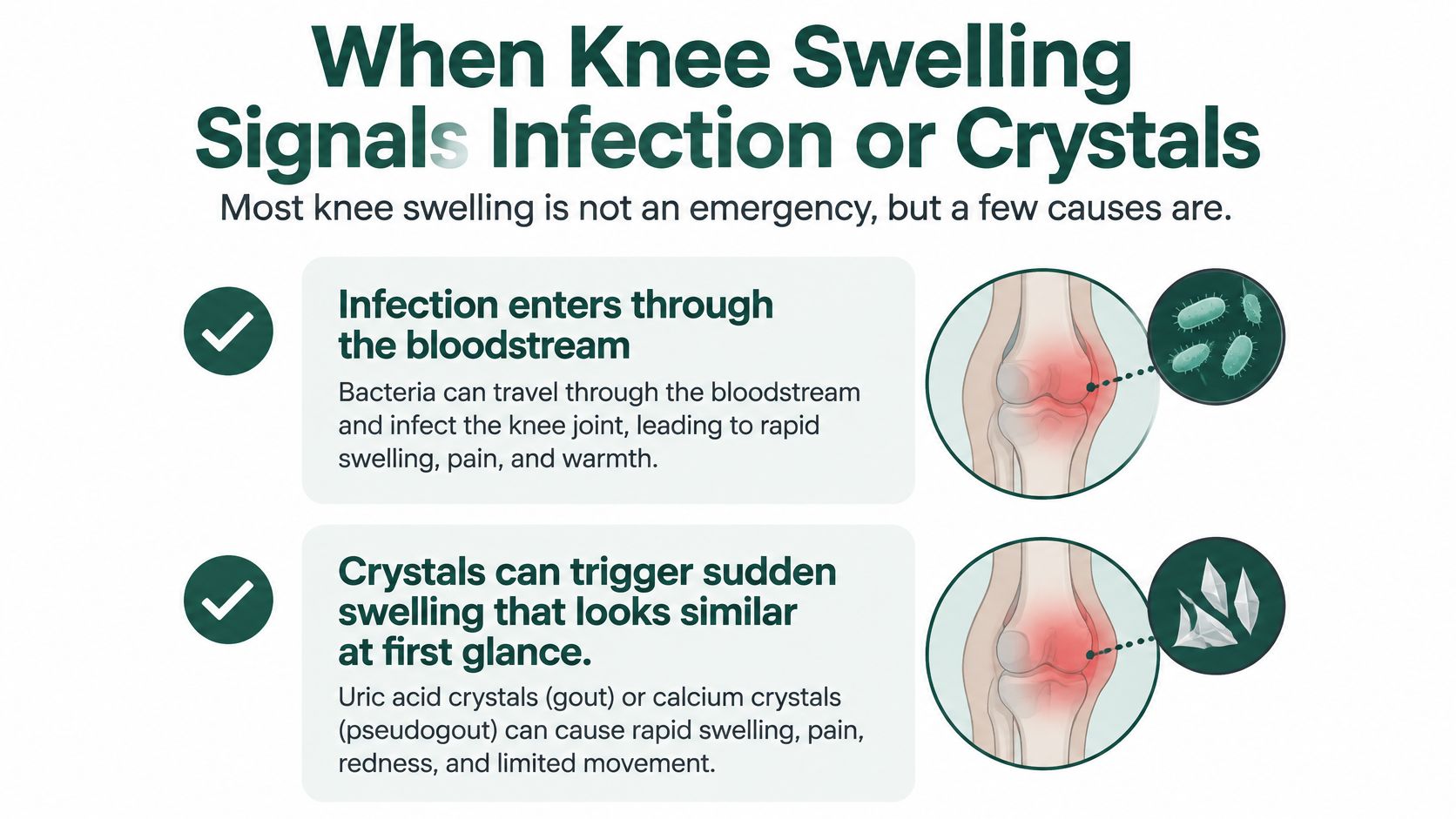
Bacteria can reach a joint through the bloodstream, a penetrating injury, surgery, an injection, or a nearby infection. The immune response can recruit large numbers of white blood cells, and the resulting inflammation can damage joint tissue. Gout and calcium pyrophosphate crystal arthritis work differently: crystals activate immune cells and can cause a sudden, intensely painful flare in a knee or another joint.
Red flags and what to do
| Sign | What it may indicate | Action |
|---|---|---|
| Hot, swollen knee with fever | Septic arthritis, or joint infection | Seek same-day emergency assessment |
| Can't put weight on the leg | Infection, fracture, or a large fluid collection | Get urgent assessment the same day |
| Sudden, severe flare, sometimes overnight | Gout or pseudogout | Arrange prompt care; joint-fluid testing may identify crystals |
| Prolonged morning stiffness with several swollen joints | Inflammatory arthritis | Contact primary care for assessment and possible rheumatology referral |
| Knee locks, catches, or gives way after a twist | Meniscus or ligament injury | Arrange an orthopedic assessment promptly |
| Swelling after recent injection or surgery | Infection needs to be ruled out | Get immediate medical review |
| Gradual swelling and pain on stairs over time | Osteoarthritis flare or fluid build-up | Book a routine appointment if symptoms persist |
A clinician may remove joint fluid for analysis because a knee's appearance alone can't reliably distinguish infection from other causes. A synovial-fluid white-cell count above 50,000 cells/mm³, with approximately 90% or more neutrophils, strongly suggests bacterial infection, but lower counts can occur early or in people with weakened immune systems. Culture is needed to identify the organism, and the clinical overview of septic arthritis describes aspiration as a key diagnostic test.
Fluid testing can also look for crystals using polarized microscopy. A hot, rapidly swollen knee with fever, inability to bear weight, or marked pain when someone gently moves the joint needs urgent assessment. Steroid or regenerative injections should wait until infection has been reasonably excluded, because suppressing the local immune response in an infected joint can worsen harm or delay treatment. If the knee is hot and swollen with fever or you can't bear weight, seek same-day care.
Diagnostic Clues and Basic Workup Your Doctor Uses
Before ordering tests, a clinician will ask when the swelling began, whether one or several joints are involved, how long morning stiffness lasts, whether the knee feels warm, and whether it locks or gives way. They'll also ask what makes symptoms better or worse. These details narrow the possibilities and help determine which tests can answer a useful question.
| Test | What it shows | When it's used |
|---|---|---|
| History and physical examination | Onset, pattern, stiffness, warmth, instability, and tenderness | At every visit, as the starting point for other tests |
| X-ray | Joint-space narrowing, bone spurs, alignment, and fractures | Often at an initial assessment for persistent pain |
| MRI | Meniscus, ligament, and cartilage damage, as well as synovitis | When the knee locks or feels unstable, or the cause remains unclear after an X-ray |
| Ultrasound | Fluid collections, a Baker cyst, and tendon or bursa changes | For swelling behind the knee or suspected bursitis or tendon problems |
| Blood tests, such as CRP, ESR, uric acid, rheumatoid factor, or anti-CCP | Clues to inflammation, gout, or systemic inflammatory disease | When symptoms suggest these conditions, interpreted with the rest of the assessment |
| Joint-fluid aspiration | White-cell count, crystals under polarized microscopy, and bacterial culture | For a hot fluid-filled knee or suspected infection or crystal arthritis |
An X-ray helps assess bones and alignment, but it doesn't show every soft-tissue problem or rule out synovitis. MRI can help when a clinician suspects a meniscus or ligament injury or needs more information about inflammation. Ultrasound can be useful for checking fluid or evaluating tendons and bursae.
Blood tests can contribute clues, but they don't provide one universal “knee inflammation level.” A review indexed by the National Library of Medicine on metabolic health and knee osteoarthritis notes that inflammatory markers remain difficult to interpret because measurement methods and outcomes vary. Markers such as CRP, interleukin-6, and TNF-alpha are promising research tools, but results must be considered alongside the person's symptoms and examination.
Say a person with a hot knee has a sudden flare. A clinician may consider joint-fluid aspiration with crystal analysis and infection testing rather than relying on an X-ray alone. Lifestyle steps may support comfort and function, but they don't replace assessment for infection, inflammatory arthritis, or structural injury. The diagnosis matters because each cause calls for a different plan.
Your Next Step for Knee Swelling That Will Not Settle
If swelling began after activity and there are no urgent warning signs, stop or reduce the activity that triggered it. Rest the knee, apply ice wrapped in cloth, use comfortable compression, and raise the leg when you're resting. Don't force a workout through worsening pain or instability.
Over-the-counter anti-inflammatory tablets aren't suitable for everyone. Check the dose and whether they're safe for you with a pharmacist or clinician, particularly if you have other health conditions or take other medicines.
If swelling persists or returns each time you run or finish a work shift, book a primary care appointment. Keep a short symptom diary with the activity before each flare, when swelling starts, how long morning stiffness lasts, and whether the knee locks, gives way, or feels hot. Bring it to the visit. A clinician may refer you for orthopedic or rheumatology assessment depending on the findings.
A useful appointment plan: Ask what cause is most likely, which test could confirm it, and what finding would change the treatment plan.
Once urgent causes have been ruled out, a gradual return to activity can help avoid repeatedly irritating the knee. Strengthening the muscles around the hip and knee may support movement, and increasing training load in steps is usually more sensible than making a sudden jump. If weight is a factor, changes may help symptoms, but they don't guarantee that all inflammation will disappear.
Restore Osteopathic Medicine offers regenerative injection therapy that may be evaluated for knee joint pain, ligament and tendon injuries, arthritis, and joint instability. For another overview of knee-pain approaches, you can read about ozone therapy for knee pain.
If knee swelling keeps returning or limits your movement, arrange an evaluation to identify what's driving it before choosing a treatment. Restore Osteopathic Medicine provides physician-led osteopathic and integrative care in Aurora, Colorado, including personalized assessment for musculoskeletal concerns. Visit Restore Osteopathic Medicine to learn about the clinic and request an appointment.