
You're staring at the appointment reminder, the calendar is already tight, and the pressing question isn't whether the PRP shot is happening, it's whether you're doing the right things before it. The smartest preparation isn't a generic handout you skim the night before, it's a series of careful decisions about screening, medications, timing, and the exact protocol your clinic is using.
Table of Contents
- Why PRP Preparation Deserves More Than a Quick Checklist
- Medical Screening and Safety Clearance
- Medications and Supplements That Change the Plan
- Hydration, Nutrition, and the Day-Before Routine
- Arrival Logistics and What to Bring
- Questions to Ask About the PRP Protocol
- Your Pre-Procedure Checklist and Last-Minute FAQs
Why PRP Preparation Deserves More Than a Quick Checklist
The morning of treatment has a way of exposing every shortcut. A patient may arrive hydrated and on time, only to learn that a recent steroid shot, an unreported blood thinner, or a low platelet count changes the plan.
The real job of preparation
Good preparation does four things at once. It helps the clinician screen for safety, preserves the biologic quality of the platelet product, reduces avoidable bruising or pain, and keeps the day from unraveling because of a simple logistics problem.
Generic internet lists usually flatten all of that into “stop anti-inflammatories and drink water.” That's too thin for a procedure that depends on your blood, your medication history, and the clinic's preparation method.
Practical rule: the best pre-PRP visit is a conversation, not a command list.
If you're trying to figure out how to prepare for PRP injection, think in layers. First comes medical screening. Then medication timing. Then the day-before routine. Then the protocol-specific questions that tell you whether this clinic's PRP matches your condition.
The rest of this guide follows that sequence, so you can walk into the appointment with fewer surprises and better questions.
Medical Screening and Safety Clearance
A solid PRP visit starts before the blood draw, with a careful look at what could make the procedure unsafe or less likely to help. The clinician needs a clean picture of infection status, bleeding risk, anemia, immune suppression, pregnancy or breastfeeding status, cancer history, and all blood-thinning medicines.
What should be disclosed before scheduling
Active infection matters because PRP should be deferred until infection has resolved. Recent fever, skin breakdown, new antibiotics, or any active local or systemic illness should be mentioned early, not at the check-in desk.
Bleeding disorders and platelet problems matter for obvious reasons, but so do less obvious issues like hemodynamic instability and immune suppression. Expert guidance also flags active malignancy as a reason for oncology-specific assessment before treatment.
A complete blood count can help the clinician decide whether PRP is appropriate or whether another specialist should be involved. Published guidance varies, but thresholds such as platelet counts below 100,000 to 150,000 per microliter and hemoglobin below 10 g/dL are commonly treated as relative concerns, not automatic permanent disqualifiers, because practices do not standardize PRP the same way.
Safety cue: if you've had unexplained bruising, heavy bleeding, or repeated infections, say that plainly before the appointment is confirmed.
Disclose dialysis, immune suppression, cancer history, pregnancy, breastfeeding, recent illness, and every blood-thinning medicine you take. That list gives the clinician the chance to decide whether PRP should move ahead, be delayed, or be coordinated with another specialist.
Medications and Supplements That Change the Plan
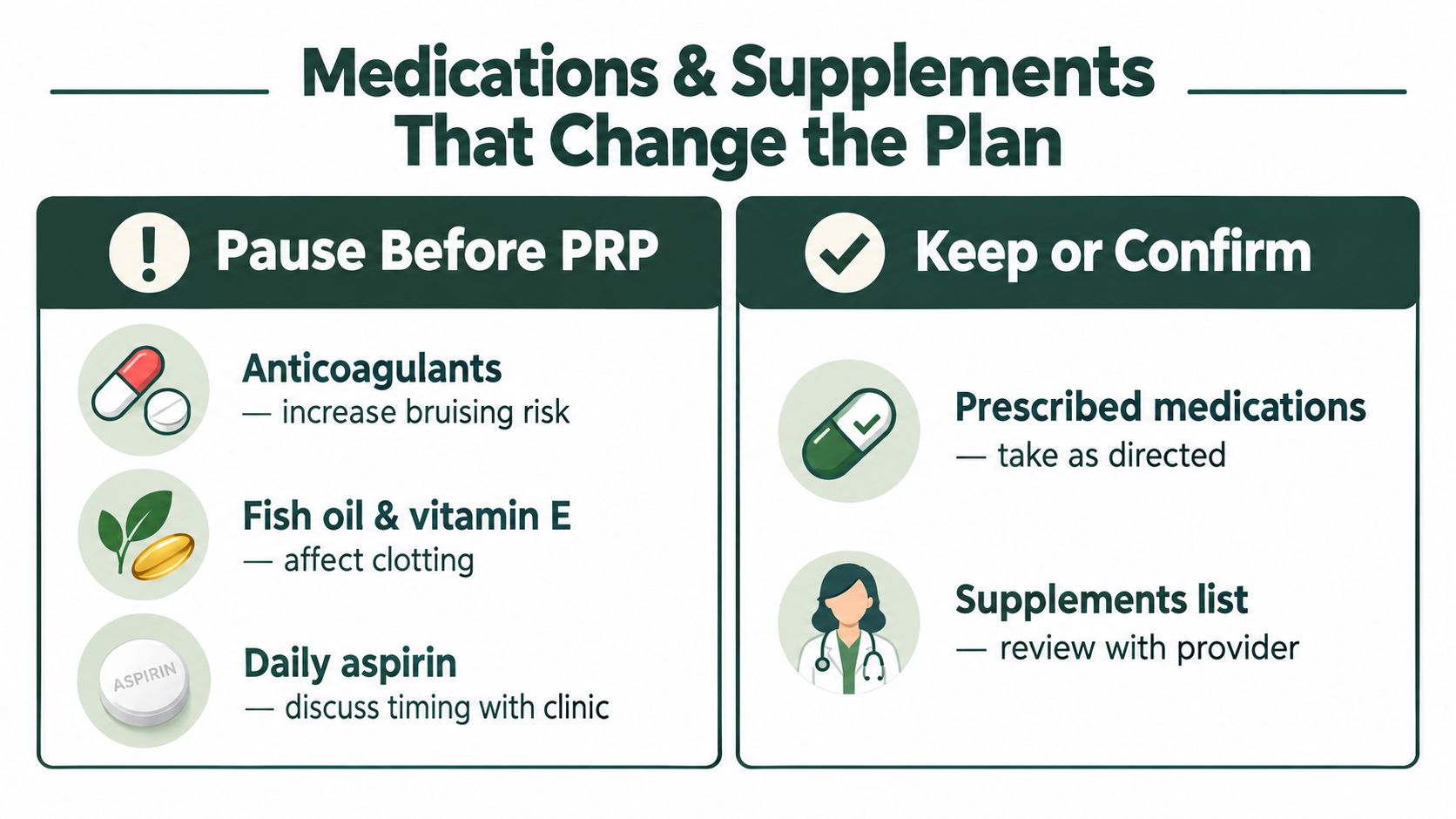
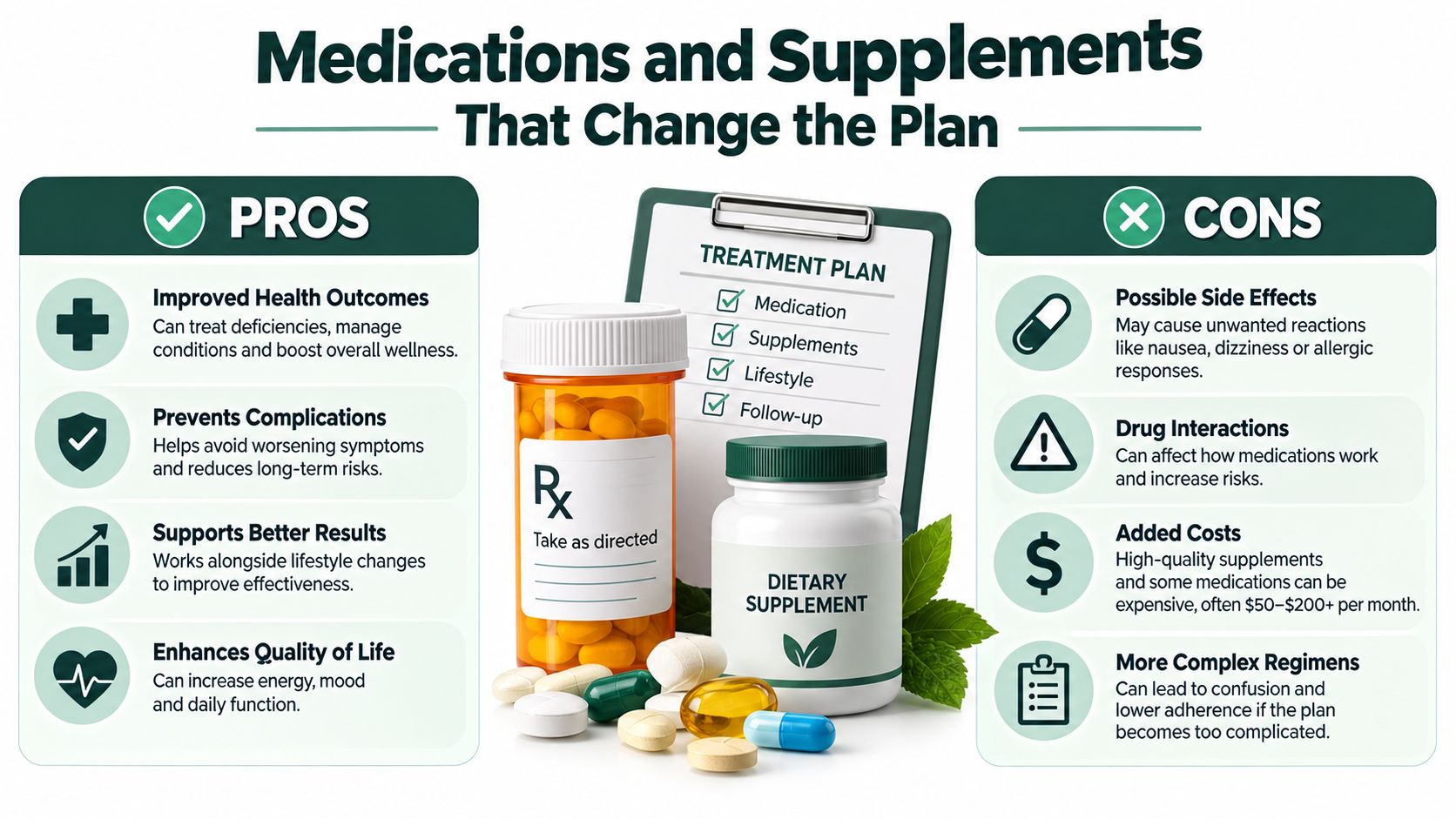
Medication review is where PRP preparation gets nuanced fast. The goal isn't to stop everything that sounds “anti-inflammatory,” it's to protect both safety and platelet function without creating avoidable harm.
NSAIDs, aspirin, and why timing matters
A 2022 systematic review found that aspirin, acetaminophen, and nonselective NSAIDs such as ibuprofen and naproxen may diminish the intended effects of PRP, while COX-2-selective NSAIDs and statins generally do not need to be withheld before treatment systematic review. Some consensus guidance recommends avoiding NSAIDs for at least 48 hours before PRP, while some protocols use roughly 5 to 7 days.
That doesn't mean every patient should stop a prescribed medicine on their own. The evidence points to platelet function and protocol differences, not proof that every pause improves clinical outcomes, so aspirin, anticoagulants, and other prescribed drugs should never be stopped without the treating clinician's explicit direction.
Corticosteroids and supplements
Timing matters with corticosteroids too. Expert recommendations identify local corticosteroid injections within 1 month and systemic corticosteroid use within 2 weeks as situations that call for caution guideline review. Those intervals aren't universal rules, because injection site, bleeding risk, and the reason for the medication all matter.
Over-the-counter supplements deserve the same attention. Fish oil, vitamin E, turmeric, garlic, and similar products can affect clotting behavior in ways patients often don't realize. For a broader look at supplement decision-making in men, the VitzAi guide to men's supplements is a useful reminder that “natural” doesn't automatically mean neutral.
A practical medication script helps:
Tell both clinicians this: “Here's every prescription, over-the-counter medicine, and supplement I use, including the dose and the last time I took it. Please tell me exactly what to pause, what to keep taking, and what needs my prescribing doctor's approval.”
For patients who want a clinician-style framework on supplements, the Restore Osteomed nutraceuticals page fits naturally into that conversation because supplement review should be part of the overall plan, not an afterthought.
Hydration, Nutrition, and the Day-Before Routine
Once the medication question is settled, the last 24 hours are about making the blood draw easier and the recovery day calmer. Hydration is the simplest place to start, because a well-hydrated patient usually gives the phlebotomist a better vein to work with and may feel less wiped out during the draw.
What to do the day before
A practical target is about 64 ounces of water in the 24 hours before the visit, especially if you work outdoors, tend to run dry, or take a diuretic. Alcohol the night before is a poor trade, because it works against hydration and can leave you feeling flat the next morning.
Food matters too. A light, protein-anchored breakfast or meal before the appointment is usually better than arriving fasted and shaky, unless your clinician has given you a specific instruction for another procedure. Sleep matters for the same reason, because fatigue can amplify pain and make a routine appointment feel harder than it should.
Skin prep is easy to overdo. Keep the treatment area quiet. Avoid new lotions, oils, or harsh products, and do not shave the same day if that tends to irritate your skin. If you have a rash, sunburn, or break in the skin near the injection site, tell the clinic before you arrive.
Small rule with big payoff: prepare the skin to be calm, not “perfect.”
If you want a polished, low-friction routine for the day before, the Mesoderm RX skincare routine is a helpful adjacent read, because the same idea applies here, keep the skin quiet and uncomplicated.
The night before, set out loose clothes, charge your phone, fill your water bottle, and confirm your ride. Those small steps reduce avoidable stress on treatment day.
For patients who also use infusion-based support, the Restore Osteomed IV infusion therapy page shows how hydration can be handled as part of a broader care plan, not just as a one-off instruction.
Arrival Logistics and What to Bring
PRP days move in stages. There's a blood draw, processing time, often image guidance for the injection, and then a short recovery period. The smoother the logistics, the easier it is to stay focused on the procedure instead of the details around it.
Make the clinic access easy
Wear clothing that gives easy access to the treatment area. If the knee, hip, shoulder, or elbow is involved, choose something that can be moved without wrestling the joint or irritating the skin.
Bring a photo ID, insurance cards if they apply, a current medication list, and any imaging or prior operative notes the clinician asked for. If you pay out of pocket, bring the payment method the clinic uses. Regenerative care is often arranged differently from routine office visits, so don't assume the front desk already has what it needs.
Transportation should be arranged in advance if the injection is for a lower-extremity or upper-extremity joint that could feel sore afterward. Most clinics prefer that patients don't drive themselves after a knee, hip, or shoulder injection, even if they feel alert enough to try.
Plan the rest of the day
Keep the schedule light. A quiet ride home, no heavy errands, and a clear break from caregiving or work tasks all help the body settle after the procedure.
If your clinician gives an ice plan, follow that exact instruction. If they don't, ask before you leave, because post-procedure comfort plans vary with the target tissue and the clinic's protocol.
That kind of preparation is mundane on purpose. The less energy you spend on logistics, the more calmly you can respond to what the body feels after the injection.

Questions to Ask About the PRP Protocol
That's where many patients get vague answers, and vague answers are a problem. PRP isn't one fixed product, because clinics vary in blood volume, spin method, platelet concentration, leukocyte content, activation, and injection technique.
The protocol itself changes the experience
A typical draw may fall somewhere around 10 to 60 mL of venous blood, and protocols often aim for platelet enrichment around 3 to 6 times whole-blood concentration protocol review. That said, a bigger number doesn't automatically mean a better result. Leukocyte content, activation method, injection volume, and the condition being treated all matter.
The most useful question is not “Is your PRP good?” It's “How do you make it, and why is that method appropriate for my diagnosis?” Single-spin methods can be simpler and may lose fewer platelets, while double-spin methods can create stronger enrichment but demand more precise handling. That trade-off matters because a protocol that fits tendon pain may not be the right one for a joint problem.
| Question to Ask | Why It Matters | Typical Range or Answer |
|---|---|---|
| What condition are we treating? | The protocol should match the target tissue and clinical goal. | Joint, tendon, ligament, or another defined target |
| How much blood will you draw? | Blood volume affects what can be processed and how much PRP is available. | Often about 10 to 60 mL |
| Is it single-spin or double-spin? | Spin method affects concentration, platelet loss, and handling complexity. | Either, depending on protocol |
| Is this leukocyte-poor or leukocyte-rich PRP? | White cell content can change the inflammatory profile. | Depends on the condition |
| Will you use image guidance? | Guidance can improve placement when anatomy is difficult or precision matters. | Often ultrasound when appropriate |
| What is the planned activation method? | Activation changes how the product behaves after injection. | Varies by clinic |
| How many injections are expected? | Some conditions are treated in a series, not a single visit. | One or more, depending on case |
If a clinic can't answer those questions clearly, that's a signal to slow down. The Restore Osteopathic Medicine regenerative injection therapy page is an example of how this topic should be framed, as a procedure that sits inside a broader treatment plan, not a one-size-fits-all event.
Your Pre-Procedure Checklist and Last-Minute FAQs
By the time the appointment is close, the goal is not perfection. The goal is to reduce avoidable friction so the body, the clinic, and the schedule all line up.
Save this short checklist
- Medical disclosures sent: infection history, bleeding issues, anemia, immune suppression, pregnancy or breastfeeding status, cancer history, and recent illness were all shared.
- Medication review completed: prescribed drugs, OTC pain relievers, and supplements were listed, then adjusted only as directed by the clinician.
- Hydration started: water intake increased the day before, and alcohol was skipped.
- Food and sleep handled: you ate normally, slept as well as you could, and didn't arrive depleted.
- Paperwork packed: ID, insurance cards if needed, medication list, imaging, and payment method are ready.
- Ride and downtime arranged: you know who's driving and what the rest of the day looks like.
- Clothing and skin kept simple: loose clothes, no fresh irritation, no new products on the treatment area.
Three last-minute questions
Can I take my morning blood pressure pill? Usually, yes if your clinician has not told you otherwise, but it should be confirmed in advance because blood pressure medicine is not the same as a drug that affects platelets.
Can I have coffee? Many patients can, but ask the clinic if you're prone to jitters, nausea, or feeling faint during blood draws. A calm vein draw is better than forcing a routine that leaves you shaky.
What if I took ibuprofen yesterday? Don't hide it. Tell the clinic the exact time and dose, because the answer depends on the drug, the procedure, and the clinician's protocol.
The best last-minute move is honesty, not improvisation.
A good pre-procedure routine also leaves room for the clinic's actual protocol, not just generic internet rules. The natural skincare guide for estheticians points to the same practical idea, keep the days before treatment simple, steady, and free of avoidable irritation.
If you're in the Denver-Aurora area and want a clinician who treats PRP preparation as part of the whole visit, not an afterthought, Restore Osteopathic Medicine offers regenerative injection therapy within a physician-led osteopathic and integrative practice. Reach out to discuss whether PRP fits your condition, what your medication list means for timing, and how to plan the appointment with fewer surprises.