
The surprise is that IV infusions are most clearly worth it when they solve a defined medical problem, not when they promise a vague feeling. In intensive care, intravenous fluid resuscitation is common, more than 30% of ICU patients receive it during their first day, and over 20% receive IV fluids on any given day (Nature review). That popularity doesn't prove every drip helps, it only shows that the route is powerful when the body needs it.
Table of Contents
- The Question Behind Are IV Infusions Worth It
- How IV Delivery Works in the Body
- Where the Evidence Is Strong and Where It Falls Apart
- Risks Most Wellness Menus Never Mention
- What a Session Actually Costs in 2026
- Choosing Patients Who Benefit
- A Clear Answer to Are IV Infusions Worth It
The Question Behind Are IV Infusions Worth It
The phrase are IV infusions worth it sounds simple, but it hides two different questions. One is medical, does this infusion solve a real problem? The other is practical, does the benefit last long enough to justify the cost, the time, and the needle?
That distinction matters because an IV bag can mean very different things. It can be lifesaving fluid resuscitation for severe dehydration, a short-term bridge when someone cannot keep anything down, or a nutrient replacement strategy when oral absorption fails. It can also be a wellness product sold for energy, immunity, beauty, or recovery with little evidence behind the promise.
A clinician starts with the medical question. Is there a documented deficit, an acute illness, or a reason oral hydration will not work? If yes, IV delivery may be the right tool. If no, the same route can become a fast, expensive detour around rest, food, oral fluids, or a diagnosis that still needs attention.
Practical rule: the more specific the problem, the stronger the case for an infusion. The vaguer the goal, the weaker the case.
That is why the first step is not the drip menu. It is symptoms, vital signs, medical history, kidney and heart function, medications, and, when needed, lab results. Those details tell you whether the bag is treatment or theater.
For a useful way to judge the choice, ask one question: what problem is this infusion supposed to solve? If the answer is clear, IV therapy may earn its place. If the answer is fuzzy, oral fluids, food, rest, or further evaluation usually deserve to come first.
How IV Delivery Works in the Body
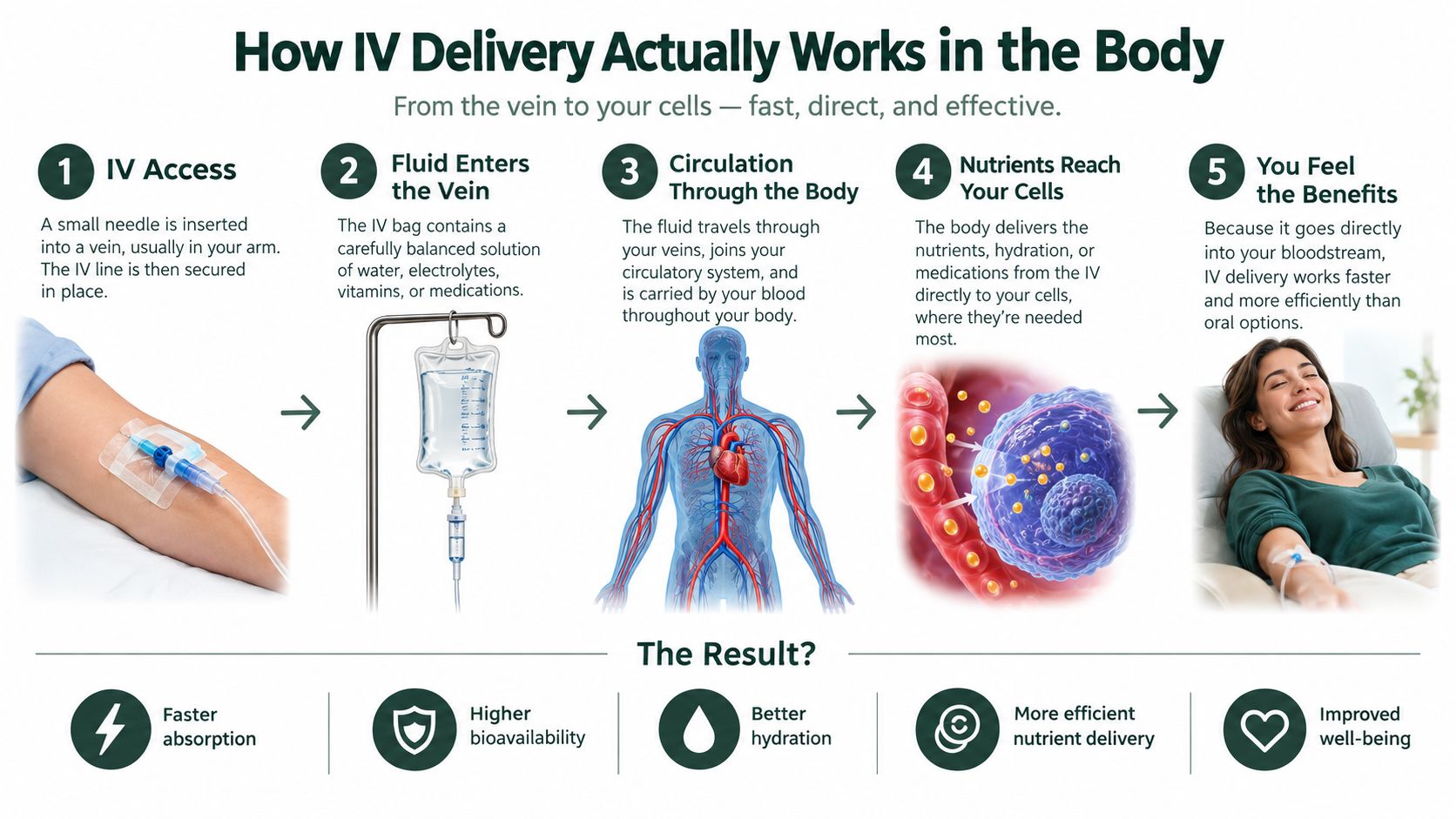
An IV infusion puts fluid directly into the bloodstream, so the stomach and intestines are bypassed. That is the practical advantage. When someone is vomiting, cannot absorb nutrients well, or is too ill to drink enough, the route itself becomes part of the treatment.
The faster effect matters in acute care. Intravenous fluids restore circulating volume and correct electrolyte problems faster than oral therapy (NCBI Bookshelf). In severe dehydration or shock, speed and dependable delivery are not extras, they are the point.
Speed is not the same as superiority
Wellness marketing often treats “faster” as if it automatically means “better.” It does not. Faster delivery matters when the gut cannot do its job. It matters much less for a healthy person who is tired, mildly dehydrated, or hoping for a boost that water, food, and rest can usually address.
That is the core trade-off. IV delivery is a bypass, not a cure. If oral hydration works, the simpler route is usually the better first choice.
Clinics also have to think about workflow, documentation, and who is responsible for what during the visit. A useful overview of duties and billing impact makes that clear without pretending the bag itself is the whole story.
If the gut works, oral hydration is usually first. If the gut does not work, IV delivery can be the right tool.
The technical value of IV therapy is narrow, but real. It is reliable, fast, and precise. The question is whether that precision solves a problem oral intake cannot fix.
Where the Evidence Is Strong and Where It Falls Apart
The best use case for IV therapy is narrow and easy to define. Severe dehydration, a clinically significant electrolyte disturbance, or an inability to keep oral fluids down are situations where IV delivery can solve a problem oral intake cannot fix as quickly or as reliably. In those cases, the route is part of treatment.
The case weakens once the goal becomes wellness language. Energy drips, immunity drips, hangover drips, and beauty drips often depend on the assumption that a familiar nutrient becomes more effective just because it is delivered through a vein. That assumption is weak.
Vitamin C is the clearest example
A randomized, placebo-controlled trial in adults with sepsis enrolled 872 patients, with 435 receiving IV vitamin C and 437 receiving placebo (PubMed). By day 28, death or persistent organ dysfunction occurred in 44.5% of the vitamin-C group versus 38.5% of the placebo group, and mortality alone was 35.4% versus 31.6%. The result does not prove every infusion is harmful, but it does show that IV delivery does not turn a nutrient into a treatment by default.
The broader literature is uneven. Earlier reviews did not settle the question, and even optimistic analyses still called for confirmation. The practical takeaway is simpler than the papers: biologically plausible does not mean proven.
That matters most for people using IVs to cover for another problem. Fatigue around hormonal transitions deserves its own workup. A resource to find perimenopause symptom insights is a better starting point than an energy drip. The same logic applies when poor sleep, heavy stress, anemia, thyroid disease, or another medical issue may be driving the symptom.
A responsible assessment starts with a target, a rationale, and a stopping point. Documented symptoms or deficiency, relevant history, medication review, ingredient and dose, the expected outcome, and what happens if the infusion does nothing all belong in the conversation.
If the claim is vague, the benefit usually is too. Treatment is about a measurable problem. Marketing is about a feeling.
For readers who want to see how nutrient support is framed in practice, Restore Osteopathic Medicine's nutraceuticals page shows how clinics present these ingredients within a broader care plan. That framing still needs a clear clinical reason before it becomes an infusion.
Risks Most Wellness Menus Never Mention
Every infusion carries risk, even in a polished setting. Common problems are easy to downplay because they sound minor, yet bruising, needle-site infection, vein irritation, bleeding, and allergic reactions still matter. In patients with heart or kidney disease, fluid overload is a larger concern because it can worsen breathing and strain the body.
The dose and ingredient list matter as much as the vein. High-dose vitamin C has a specific caution profile, including kidney-stone risk in susceptible patients, kidney injury in people with renal disease, and hemolysis in those with undiagnosed G6PD deficiency (National Cancer Institute). Screening for kidney disease, stone history, and G6PD status is required when that ingredient is on the table.
Sterility is part of the treatment
A clinic can use the right ingredients and still cause harm if preparation or handling is poor. FDA warnings have described adverse events linked to IV hydration clinics and compounded products prepared under insanitary conditions. The person mixing the bag, the sterility of the product, and the setting all affect safety.
For pregnant or postpartum patients, adjunct options like ozone therapies should only be considered after a physician review, not added to a standard drip menu. The same caution applies to people taking multiple medications or living with heart, kidney, or blood-pressure problems. A standardized “energy” or “immunity” formula is the wrong starting point in those situations.
If you are evaluating a clinic, it helps to browse consent templates before you agree to anything. Good consent should cover the ingredients, risks, expected benefit, and what happens if the treatment does not help.
Many wellness menus treat risk as a footnote. Clinically, it is a screening checklist. If that checklist is skipped, the drip is more marketing than medicine.
What a Session Actually Costs in 2026
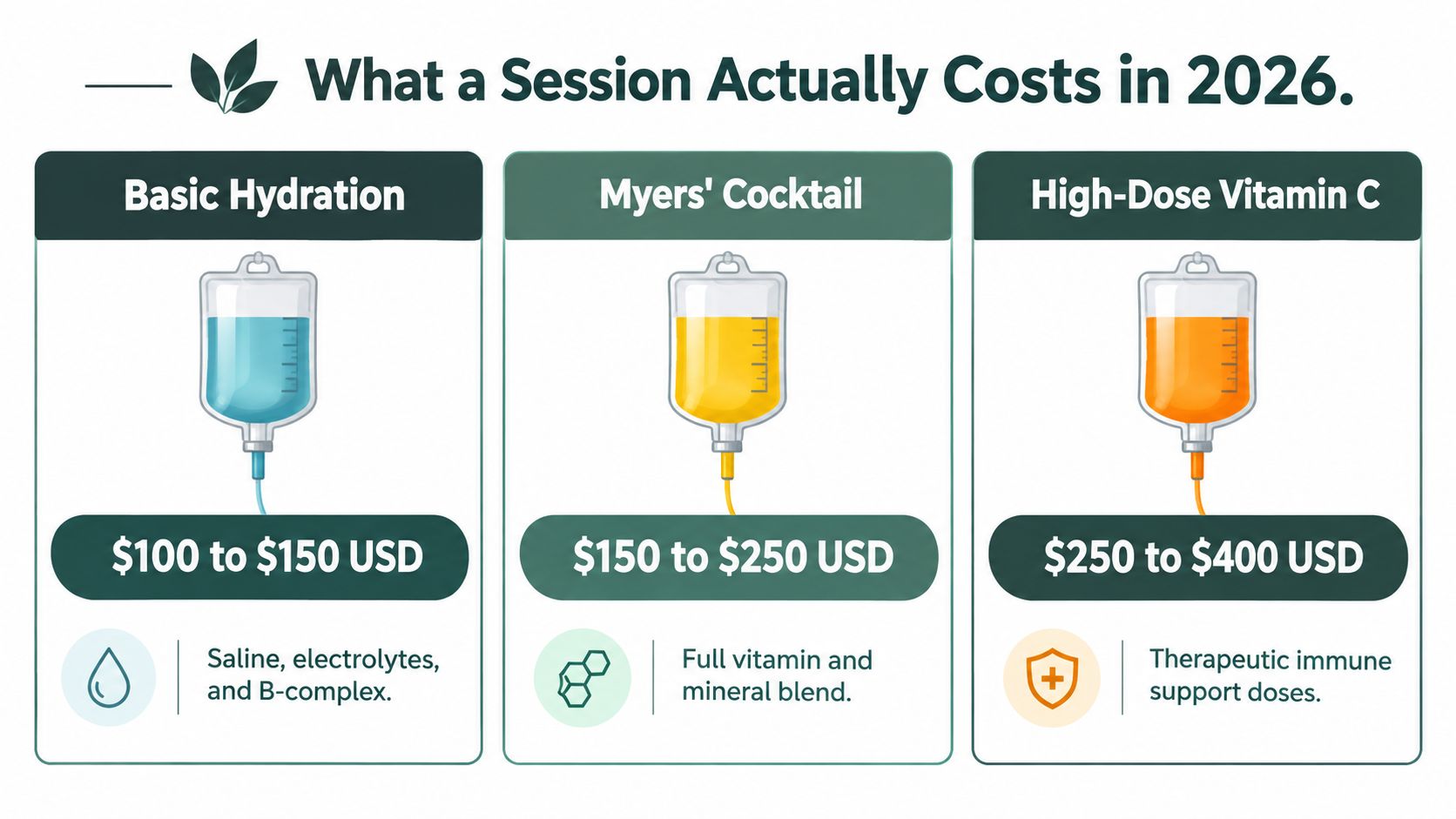
Cost is part of the value question because a treatment can be medically reasonable and still not be worth the price. Wellness drip menus commonly sit in a broad range that reflects fluids, clinician time, travel or facility overhead, and the ingredients used. Once add-ons enter the conversation, the quote can climb quickly.
Medically indicated infusions usually make more sense when there's a real clinical need behind them. In those cases, insurance may cover the underlying indication, such as severe dehydration or a documented deficiency, but elective wellness add-ons are a different story. That's where many patients feel the difference between treatment and retail.
What should be on a fair quote
A transparent quote should clearly separate the base infusion from extras. You should be able to see the fluid type, the ingredient list, the dose, and whether the visit includes medical oversight, screening, or follow-up.
The important question isn't just “what's the sticker price?” It's “what am I paying for?” In a medically supervised setting, you're paying for assessment, sterile preparation, dosing decisions, and a professional who can decide not to infuse you if the risk is too high.
For patients exploring broader integrative care, Restore Osteopathic Medicine offers IV infusion therapy as part of its physician-led services, along with other support modalities such as ozone therapies and functional medicine. That doesn't make an infusion automatically worthwhile, but it does place it inside a more complete evaluation rather than a standalone menu.
A session is worth less when it repeats a problem instead of solving it
Repeat visits are easy to normalize when pricing is framed as self-care. That can be useful for some patients, but it can also hide the fact that a recurring symptom needs workup, not another bag.
| What to ask | Why it matters |
|---|---|
| What problem is this treating? | If the answer is vague, the value is weak. |
| What ingredient is in the bag? | The dose and formulation change both benefit and risk. |
| What happens if I don't improve? | A stopping rule prevents endless rebooking. |
A fair price is not just about dollars. It's about whether the visit solves something measurable, or just buys a short-lived feeling.
Choosing Patients Who Benefit
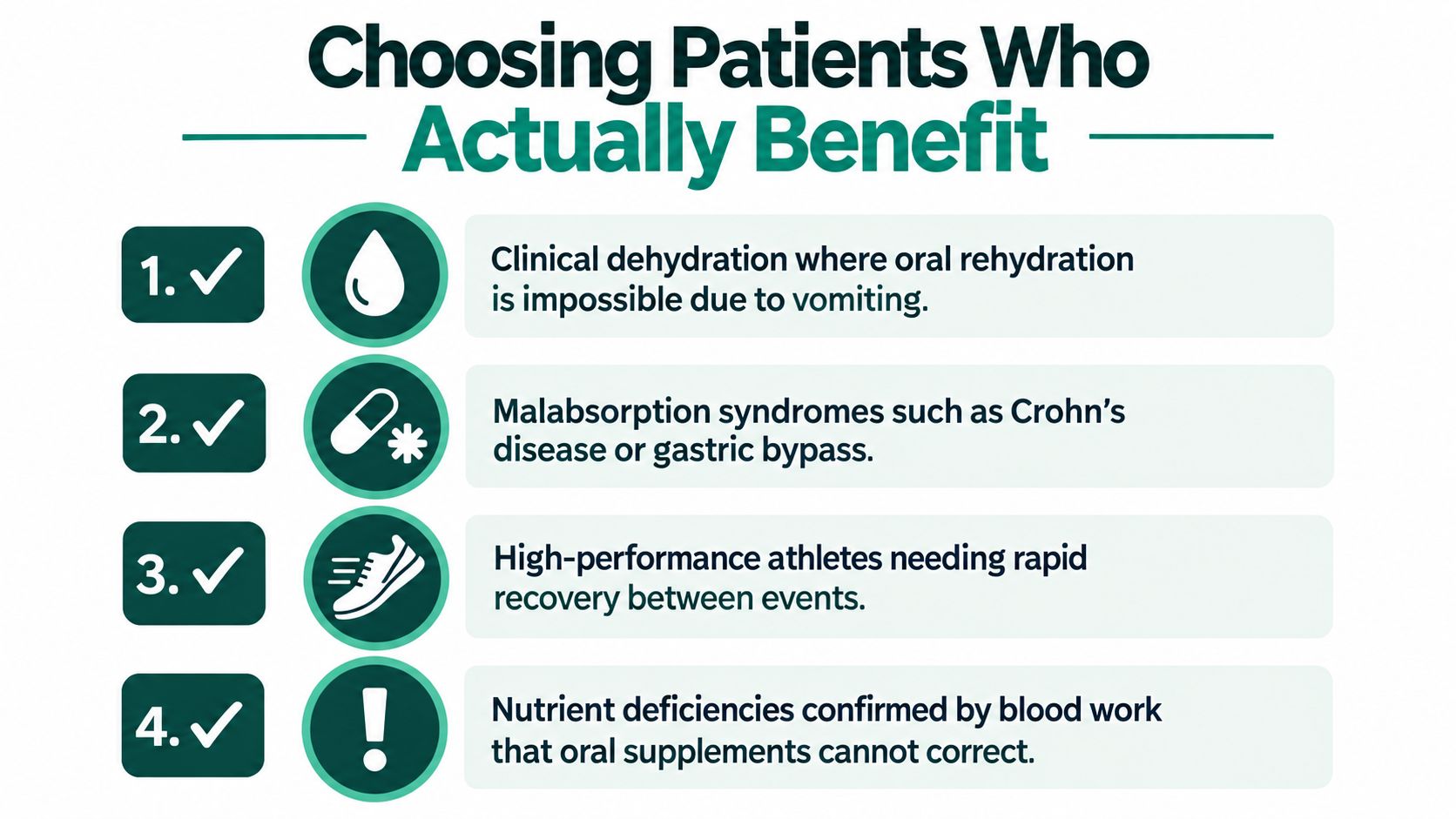
The patients most likely to benefit are the ones with a problem oral intake cannot correct well enough. That includes clear dehydration when vomiting makes drinking impossible, documented electrolyte abnormalities, recovery after gastrointestinal illness under appropriate supervision, post-operative situations where the clinician recommends it, and confirmed malabsorption after oral repletion has already failed.
A second group should usually skip the drip. Healthy adults looking for a quick energy boost, an “immunity reset,” a hangover cure, or a beauty glow are usually asking the IV route to do the work of sleep, food, rest, and time. That is a poor trade in most cases.
A practical checklist to bring to the visit
Before you consent, ask for the basics that shape safe decision-making.
- What symptom or deficiency is this treating? If no clear target is named, the treatment is weakly justified.
- What is the ingredient-and-dose rationale? The mixture should match the problem, not a marketing slogan.
- Have kidney and heart risks been reviewed? Fluid handling changes in those conditions.
- Are medications reviewed for interactions? Infusions do not happen in a vacuum, and drug interactions can matter.
- If vitamin C is included, has G6PD and kidney risk been considered? That screening is part of responsible use.
- What outcome should I expect, and by when? If no one can define success, there is no way to judge whether it helped.
- What is the stopping rule if I do not improve? A clinic should be ready to stop repeating a treatment that is not working.
That same standard is what you should expect from a careful clinic visit, including medical history, medication review, a clear ingredient-and-dose rationale, a defined outcome, and a stopping rule if improvement does not occur. If a practice like functional medicine is part of the conversation, it should be used to look for the cause behind the symptom, not to replace that work.
If a clinic cannot explain why this infusion, why this dose, and why now, the safest answer is usually no.
That is the filter wellness marketing often skips. The right patient, the right indication, and the right rationale matter more than the appeal of the drip itself.
A Clear Answer to Are IV Infusions Worth It
Yes, IV infusions are worth considering when the body has a real deficit, oral hydration isn't enough, or rapid correction is medically necessary. That includes severe dehydration, significant electrolyte problems, and other situations where the vein is the right route for the job.
No, they are not a blanket upgrade over water, food, sleep, or evaluation of the underlying cause. In otherwise healthy adults, the evidence for routine wellness infusions is weak, and the risk profile gets less forgiving when the product is high-dose, poorly screened, or casually marketed as a fix for fatigue, immunity, or detox.
The strongest lesson from the research is uncomfortable for the wellness industry but useful for patients. A substance that makes biological sense is not automatically helpful when delivered intravenously, and some high-profile uses have failed to improve outcomes or have raised concerns instead (PubMed). That doesn't make all infusions bad. It means the route is only as good as the indication.
So the better question is not just are IV infusions worth it. It's this, what measurable problem is this infusion supposed to solve, and is IV delivery the right tool for it? If the answer is clear, targeted, and clinically justified, an infusion can be valuable. If the answer is vague, the best treatment may be oral fluids, rest, food, or a proper medical workup instead.
If you're deciding whether an infusion fits your symptoms, Restore Osteopathic Medicine can evaluate the underlying cause and talk through whether IV therapy is the right tool or whether another approach makes more sense. Visit Restore Osteopathic Medicine to review their physician-led care and schedule a conversation about your options.